Showing posts with label Research and Studies. Show all posts

Friday, November 23, 2012

Clothing Concerns: Are our garments filled with hazardous toxins?

Most people know the importance of toxins in products we ingest, but we often don't consider the toxins in products we wear. According to Greenpeace, chemicals used in dyes and processing fabrics can cause cancer and disrupt hormones.

Greenpeace has released a new report—"Toxic Threads: The Big Fashion Stitch-Up"—that investigated the presence toxic and hazardous chemicals in low-priced clothing brands, and the results are shocking. The report, which is a part of Greenpeace's Detox Campaign, reveals that "textile manufacturing facilities using hazardous chemicals and the presence of those chemicals in the products of those facilities."

Greenpeace tested 141 clothing items from 20 major brands, including Zara, Levi’s, Mango, Calvin Klein and H&M, looking for evidence of phthalates, nonylphenol ethoxylates (NPEs) and azo dyes, which can break down into cancer-causing amines. The report explains the process:
A total of 141 items of clothing were purchased in April 2012 in 29 countries and regions worldwide from authorized retailers. These were manufactured in at least 18 different countries, mainly in the Global South, according to the garments’ labels. However, the place of manufacture was not identified for 25, which is symptomatic of an industry that is not as transparent about its manufacturing practices as it should be. The garments, designed for men, women, and children, included jeans, trousers, t-shirts, dresses, and underwear, and were made from both artificial and natural fibres; 31 of the samples bore a plastisol print, and for these items it was this part of the fabric that was tested for phthalates and nonylphenol ethoxylates (NPEs).
What were the results? The investigation found that there were high levels of toxic phthalates in four of the garments, cancer-causing amines from the use of certain azo dyes in two garments, and NPEs were found in 63 percent of garments. What's more, the brands with the highest concentrations (1,000 ppm or more) of NPEs were C&A, Mango, Levi’s, Calvin Klein, Zara, Metersbonwe, Jack & Jones, and Marks & Spencer.

Read the rest of this article at Greener Ideal

Wednesday, March 28, 2012

Thyme: A Potent Cure For Acne?

When I think of thyme, I think of chicken breasts and pasta dishes which require this herb to add flavor and taste. But according to a recent press release by the researchers from Leeds Metropolitan University, thyme is not only an effective treatment for acne, but a better one as well.

In their study, researchers looked at the effect of thyme, marigold and myrrh on acne. Their results were that all three were effective in killing the bacteria, but thyme was more effective--even more effective than standard concentrations of benzoyl peroxide.

Lead researcher, Dr. Margarita Gomez-Escalada shared that the next step would be to carry out more tests that mimic skin in an everyday environment and see how thyme can replace acne treatments.

"The problem with treatments containing benzoyl peroxide is the side-effects they are associated with," explained Dr. Gomez-Escalad in the press release. "A burning sensation and skin irritation is not uncommon. Herbal preparations are less harsh on the skin due to their anti-inflammatory properties while our results suggest they can be just as, if not more, effective than chemical treatments."

Image via Cooking Light.

Monday, March 5, 2012

Food For Healthy Hair

Don't we all covet beautiful hair? Sleek silky locks that never tangle or not up. You know, the kind we see in Pantene Pro-V commercials.

A recent article in the Huffington Post shared 10 foods that you should include in your diet if you want healthy hair. The article talks to Dr. Alan Bauman who shares some key points:
  • Protein is key for growing hair
  • You need both a healthy scalp and healthy hair
  • Crash diets lead to hair loss
Below are the 10 power foods that lead to healthy beautiful hair--but if you think eating a health meal will give instant results, think again! Dr.Bauman shares with the Huffington Post that it can take up to six weeks for the results to show.

1. Salmon
2. Dark Green Vegetables
3. Beans
4. Nuts
5. Poultry
6. Eggs
7. Whole Grains
8. Oysters
9. Low-Fat Dairy Products
10. Carrots

Image via Tumblr.

Monday, February 20, 2012

Monounsaturated-fat Reduces Wrinkles

If you're looking to keep your wrinkles at bay, then start from the inside out. 

The Journal of the American College of Nutrition published a study which showed that people who had higher intakes of butter had more wrinkles than those with high intakes of olive oil. The difference between butter and olive oil is that butter is saturated fat and olive oil is monounsaturated!

Specifically, "overall, [their] finding suggest that subjects with a higher intake of vegetables, olive oil and monounsaturated fat and legumes, but a lower intake of milk/milk products, butter, margarine and sugar products had less skin wrinkling in a sun-exposed site."

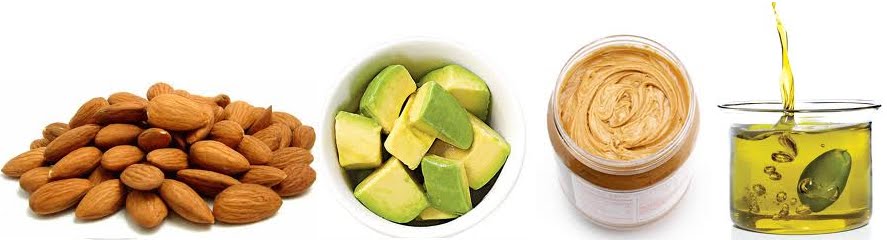
Monounsaturated-fat Foods: Almonds, Avocado, Peanut Butter, and Olive Oil


Monday, February 13, 2012

What do people find beautiful?


The March 2004 Issue of Evolution & Human Behavior revealed what influences our decision in determining an individuals attractiveness.
Key Points:
  • Physically attractive traits include high degrees of bilateral facial symmetries, such as eyes that are identical in shape and size, and waist-to-hip ratios of 0.7 for women and 0.9 for men.
  • People may see physical attractiveness differently when they know that person's other qualities, usually invisible to strangers
  • The researchers offer this beauty tip: "If you want to enhance your physical attractiveness, become a valuable social partner."
But that's just what one study says. In the end of the day, beauty is in the eye of the beholder. 

Information Source: Here

Monday, February 6, 2012

Mineral Water..the common cure for Wrinkles?

It's been the cardinal rule of beauty that if you drink 8 glasses of water, you'll have flawless skin. I've heard this since I was a wee little five year old and continue to hear this till this day. 

It's been a conflicted statement since some argue that it merely nourishes the outermost layer of your skin and other insist that it eliminates wrinkles and nourishes your skin from inside out.

Recent studies prove that water does help the skin! But more importantly, specific types of water benefit the skin more.

The study was conducted giving half the subjects tap water and the other half mineral water. Before and after pictures were taken. Results showed that women who drank tap water showed a 19% decrease in wrinkles and women who drank mineral water showed a 24% decrease in wrinkles.

Wednesday, January 25, 2012

Walnut Wonders: The Benefits of Eating Walnuts

My quest to keep wrinkles at bay has led me to consume a lot more walnuts and more regularly. 

Walnuts are a rich source of fatty acids and consume just one-fourth cup of walnuts can help you meet 95 percent of your daily omega-3 requirements. 

What's more, a new study from Penn State found that walnuts fights stress. Researchers asked subjects with high LDL cholesterol (a.k.a. “bad” cholesterol) to incorporate walnuts into their diets and found some pretty convincing evidence: In a matter of six weeks, subjects who incorporated walnuts in their diet had lower blood pressure in response to stressful situation and a lower resting blood pressure rate as well. 

That all said, walnuts are high in calories so the best way to reap the benefits without going overboard is to stick to a 1-ounce serving which would equate to a little under 200 calories. 


Monday, January 16, 2012

Longterm Effects of High Heels


I LOVE wearing high heels. 

Even though my father was the one who encouraged my first purchase of heels (probably in a moment of weakness due to his growing concern over my lack of femininity), he never failed to point out that Winston Churchill's mother died of high heels and thus, emphasized how I should stop wearing them. 

Needless to say, within ten minutes of this article appearing on CNN, it was forwarded to my e-mail account with a little personalized note:
I told you heels are bad for you! Next time I come home, your heels better be destroyed or sold. Crazy Cow!
What daddy dearest forgot to do was READ the article. Here are the highlights:
  • Wearing two-inch heels (or higher) five or more days a week shrinks a woman's calf muscle fibers by 13 percent, on average. It also thickens her Achilles tendon -- which attaches the calf muscle to the heel -- by 22 percent.
  • For some habitual high-heel wearers, switching from stilettos to flats can be a shock.
  • Discomfort "will primarily occur in women wearing almost exclusively high-heeled shoes."
  • If you wear stiletto's, make sure to stretch to keep muscles and tendons strong.

Article Source: CNN Health
Image Source: FashionEtc

Thursday, January 5, 2012

Makeup Expiration Dates

I ashamed to admit I have makeup in my drawer from 8 years ago and while I want to throw it away because it's old, I also don't want to because they're not even close to being used! 

In my defense, this makeup is mostly eyeshadow, but still.

Everything has an expiration date and so does makeup! Check out this video from Good Housekeeping that talks about makeup expiration (specifically mascara and sunscreen):


Below are a list of beauty products, how long they last, and a little tidbit on why you shouldn't let them expire:

Mascara: 3 months
Liquid eyeliners: 3months
Pencil Eyeliners: 2 years
Cream Eye Shadows: 6 months
Powder Eye Shadows: 2 years

Lipstick: 2 years
Lipgloss: 2 years
Lipliner: 2 years (or more)

Liquid Face Makeup: 6 months
Face Powder: 2 years

Nail Polish: 1-2 years
Sunscreen: 6 months
Hair Products: 1 year
Perfume: 2 years (but can be longer)

Skin Care:"Acne creams and other over-the-counter products that contain drugs are FDA regulated and usually carry expiration dates. But cosmeceuticals (products claiming to have anti-aging and skin-changing benefits) are not regulated, and once they’ve been used, they shouldn’t be kept for more than six months — or, if they’re in pump bottles, a year"


I can only speak for myself when I say that I definitely don't follow all these little guidelines. But rest assured I am going to be more cautious of anything that goes near my eyes.

Information Source: Here and here